




5 Ways Conversational AI Is Transforming How People Interact with Technical Documents

Artificial intelligence adoption continues to expand across research, engineering, healthcare, and software development as organizations look for faster ways to process technical information. Digital tools that allow natural language conversations with complex documents are becoming part of everyday workflows. One example is AI chat with pdf app, which enables users to ask questions about technical files, generate summaries, and locate specific information without manually reading every page. Research from McKinsey & Company suggests that generative AI has the potential to improve productivity across many knowledge-intensive industries, particularly where employees spend significant time searching for and interpreting information.
Technical documentation continues to grow in size and complexity. Software guides, engineering specifications, scientific papers, laboratory reports, and regulatory standards often contain hundreds of pages filled with specialized terminology. While traditional search functions remain useful, conversational document assistants introduce a different approach by allowing users to interact with documents through natural questions. This shift helps reduce time spent navigating dense material while encouraging a more focused understanding of relevant sections.
1. Simplifying Software Documentation
Software platforms frequently include extensive documentation covering installation procedures, programming interfaces, configuration settings, troubleshooting, and security recommendations. Developers often spend valuable time searching through multiple pages before finding the exact answer they need.
Conversational document tools streamline this process by allowing users to ask direct questions such as how to configure a feature or resolve a particular error message. Rather than manually scanning an entire manual, users receive targeted responses based on the uploaded documentation.
Research published by Stack Overflow consistently shows that developers rely heavily on documentation and technical references during daily work. Faster access to accurate information can improve productivity while reducing interruptions during software development.
2. Making Engineering Manuals Easier to Navigate
Engineering manuals often include detailed diagrams, equipment specifications, maintenance schedules, safety procedures, and operational instructions. These documents support industries ranging from manufacturing and construction to energy and transportation.
Finding one specific requirement inside a lengthy manual can take considerable time, especially when working under project deadlines or during equipment maintenance.
AI-powered PDF assistants improve navigation by helping users locate relevant sections through conversational queries instead of relying solely on chapter indexes or keyword searches. Engineers can request explanations of procedures, identify maintenance intervals, or summarize operational guidelines without reviewing every page.
Experts at National Institute of Standards and Technology (NIST) emphasize the importance of accurate technical documentation for quality management, safety, and standardization across engineering disciplines. Improved document accessibility supports these objectives while reducing the effort required to retrieve information.
3. Improving Research Paper Understanding
Scientific literature continues to expand rapidly across medicine, engineering, environmental science, chemistry, physics, and many other fields. Researchers frequently review multiple studies before beginning new projects or evaluating existing evidence.
Reading every paper from beginning to end remains important for thorough analysis. However, conversational PDF tools can assist by generating concise summaries, identifying research objectives, highlighting methodologies, or explaining technical terminology before users examine the full publication.
This approach supports literature reviews while helping students and professionals become familiar with unfamiliar topics more efficiently.
Data from UNESCO indicates that global scientific output continues to grow steadily, increasing the volume of published research that professionals must evaluate. Intelligent document assistants help users organize and prioritize this expanding body of information without replacing critical reading and expert judgment.
4. Supporting Laboratory Report Analysis
Laboratory reports often combine experimental procedures, measurements, statistical analysis, observations, and conclusions into highly structured documents. Researchers, laboratory managers, quality assurance teams, and students frequently revisit previous reports to compare results or verify findings.
Conversational AI makes these reports easier to explore by allowing users to ask focused questions about experimental conditions, numerical values, testing methods, or reported outcomes. Instead of manually locating every relevant table or paragraph, users can quickly identify sections requiring closer review.
Document conversation systems can also assist with summarizing lengthy experimental reports before meetings, supporting collaboration among multidisciplinary research teams.
The National Institutes of Health (NIH) highlights the importance of accurate documentation and effective data management in scientific research. Faster document navigation supports these practices while preserving the need for careful human verification.
5. Making Technical Standards More Accessible
Technical standards play an essential role across manufacturing, healthcare, construction, cybersecurity, telecommunications, and many other industries. These documents define terminology, safety requirements, testing procedures, and compliance expectations. Professionals working with these standards may also benefit from understanding the mathematics behind modern digital systems, since many engineering and computing technologies are built upon mathematical principles that influence system design, modeling, and performance.
Standards documents are intentionally detailed because precision is necessary for consistency and regulatory compliance. However, their complexity can present challenges for professionals who need answers to specific implementation questions.
Conversational document assistants help users identify relevant clauses, summarize sections, and clarify definitions within approved documentation. Compliance specialists, engineers, auditors, and project managers can quickly locate information while continuing to reference the original standard for complete context.
International Organization for Standardization (ISO) notes that internationally recognized standards improve quality, safety, interoperability, and efficiency across industries. Better access to these documents supports informed decision-making without changing the authority of the original standards themselves.
Why Human Expertise Still Matters
Although conversational AI significantly improves document accessibility, it does not replace professional expertise. Technical documents often require interpretation based on industry knowledge, organizational policies, regulatory requirements, or scientific context.
Engineers must still validate engineering calculations. Researchers continue to evaluate study quality and statistical methods. Software developers verify implementation details before deployment. Regulatory professionals confirm compliance using official documentation.
Modern document conversation platforms work best as productivity tools that accelerate information retrieval while leaving critical decisions to qualified professionals.
Conclusion
Growing volumes of technical documentation have changed how professionals search for information across scientific, engineering, healthcare, and software environments. Conversational document technology offers a practical way to explore software documentation, engineering manuals, research papers, laboratory reports, and technical standards through natural language questions.
As intelligent PDF assistants continue to evolve, they are helping users summarize content, locate relevant sections, and better understand complex materials without replacing careful analysis or expert review. Combining human expertise with conversational document analysis creates a more efficient workflow while maintaining the accuracy and reliability that technical work demands.


 Schools carry a quiet responsibility. Beyond teaching reading and math, they must keep children safe and healthy every day. Clean classrooms, restrooms, cafeterias, and hallways are not just about appearance, and many institutions look to best tile cleaning Brisbane services as a benchmark for maintaining high standards. These spaces affect student health, attendance, and even academic performance. At the center of this effort are clear hygiene standards and proper tile care.



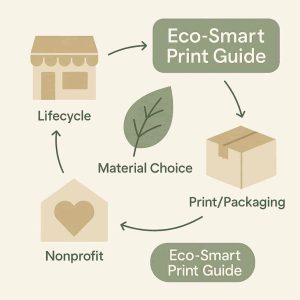 Sustainability can sound abstract until it shows up in everyday print and packaging choices. For small businesses and nonprofits, the challenge is staying responsible without stretching budgets or losing quality. Thankfully, environmental science now offers clear ways to spot what’s truly sustainable, looking at recyclability, material sourcing, inks, coatings, and waste impact. Many organizations leaning into sustainability also prioritize support for local businesses, reinforcing community-driven growth and responsible production. Even community-centered guide hubs like Stand With Main Street resources offer business-focused resources that help founders and charity leaders understand grants and eco-smart decisions early. In the end, choosing sustainable print and packaging isn’t about changing everything, it’s about knowing what to look for so you invest in materials that match both your values and your budget.
 Chinese garments like the qipao have existed for centuries, yet they are now being reimagined through smart textile technology. These traditional dresses are more than just clothing. They represent history, identity, and cultural pride. Today, innovation is adding a new layer of meaning and utility to these iconic garments, creating a fusion of heritage and high-tech design.
 Managing several office or wellness locations across cities can get complicated. Businesses and service providers often deal with scattered data, inconsistent communication, and disconnected systems. But today, science and technology offer a more unified solution: integrated community platforms that help manage multiple sites more efficiently.


 Design Principles in the Filmora Logo

 Vintage trailers have a timeless charm. Their classic designs take us back to simpler times. However, modern technology can enhance these nostalgic gems. Combining science and technology with vintage trailer customization creates a perfect blend of old and new. Here’s how you can bring this blend to life.

 In Shirt Room Salons, you and your friends or business companions will have a more private and relaxing experience than in noisy clubs or karaoke joints. These salons have exploded in popularity in Gangnam, drawing in both locals and tourists with their innovative approach.
 Science and technology are playing an increasingly important role in the relocation industry. With the help of science and technology, relocation services are becoming more efficient, cost-effective, and tailored to each customer’s needs.


 While the average TikTok creator is from Generation Z, TikTok gradually attracts a broader user base. According to recent statistics, approximately 38% of TikTok users in the United States are over 30. TikTok marketing could be a terrific outlet for your brand if
 Broad frontiers of science and technology continue to advance, impacting all areas of science, industry, and commerce. They usher in a new digital age and revolutionize the world.
